
 Free Shipping
*Applies to Ipe & Cumaru short length orders from 3–5 ft. Minimum purchase of $2,500 required. U.S. mainland only. Other conditions may apply.




How Thick Is Trex Decking?
Best Sellers

Posted on August 23, 2026 at 11:28 pm
Table of Content
If you are planning to build a deck, one of the first questions you may have is, “How thick is Trex decking?” Knowing the thickness of your decking boards is important because it affects installation, strength, appearance, and compatibility with your deck framing.
Trex decking is available in several product collections, and while the boards look similar, their actual thickness can vary slightly depending on the collection. Understanding these dimensions can help you choose the right boards for your outdoor project.
In this guide, you’ll learn about Trex decking thickness, standard board dimensions, product line differences, and how to select the right option for your deck.
What Is Trex Decking?
Trex decking is a composite decking material made from a blend of recycled wood fibers and recycled plastic. It is designed to offer the appearance of natural wood while requiring far less maintenance than traditional lumber.
Unlike wood decks, Trex decking does not need regular staining, sealing, or painting. It is engineered to resist fading, moisture, termites, and everyday wear, making it a popular choice for residential and commercial outdoor spaces.
Trex decking is commonly used for:
- Backyard decks
- Pool decks
- Rooftop decks
- Outdoor patios
- Walkways
- Entertainment areas
How Thick Is Trex Decking?
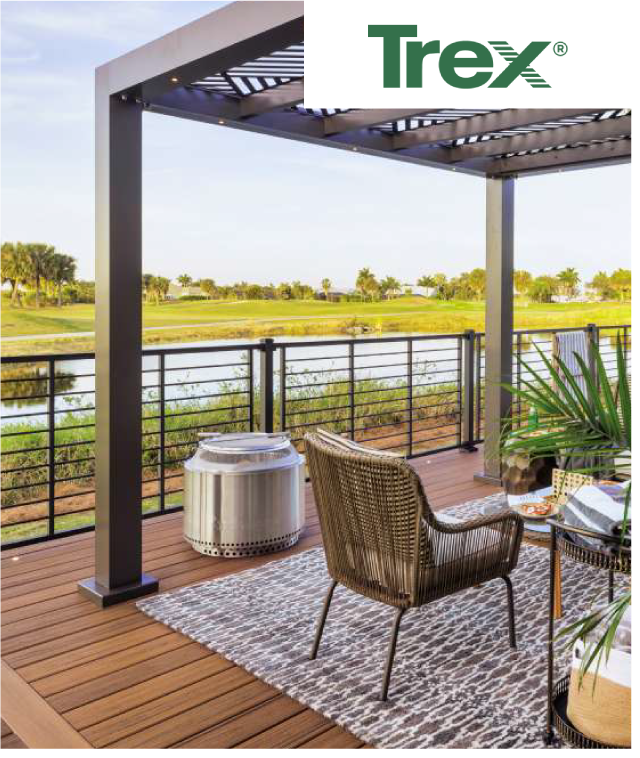
Trex decking has a nominal thickness of 1 inch, but the actual thickness is slightly smaller. Depending on the specific Trex collection, the actual thickness generally ranges from 0.82 inches to 0.94 inches.
Although the difference may seem small, it is important to know the actual dimensions when planning your deck or replacing existing boards.
For example:
- Trex Select boards have an actual thickness of approximately 0.82 inches.
- Trex Enhance boards have an actual thickness of approximately 0.94 inches.
The thickness variation is based on the product line and manufacturing design, but all collections are built to provide reliable performance when installed according to the manufacturer’s recommendations.
Understanding Nominal and Actual Thickness
When shopping for decking materials, you may notice both nominal and actual dimensions.
Nominal Thickness
The nominal size is the name used to describe the board. Trex decking is commonly sold as a 1-inch thick board.
Actual Thickness
The actual thickness is the true physical measurement of the board after manufacturing.
For Trex decking, the actual thickness typically ranges from:
- 0.82 inches
- 0.94 inches
Knowing the actual size is especially important when replacing boards or planning deck framing.
Trex Board Dimensions
Trex decking boards have standard dimensions that make planning and installation easier.
| Dimension | Measurement |
| Nominal Thickness | 1 inch |
| Actual Thickness | 0.82 to 0.94 inches |
| Nominal Width | 6 inches |
| Actual Width | Approximately 5.5 inches |
| Available Lengths | 12 ft, 16 ft, and 20 ft |
These dimensions remain consistent across most residential Trex decking products.
Why Does Deck Board Thickness Matter?
The thickness of a decking board affects more than just its appearance.
Strength
Proper board thickness helps support everyday foot traffic and outdoor furniture.
Stability
A well-supported deck feels solid underfoot and reduces unwanted movement.
Installation
Knowing the exact thickness allows builders to plan transitions, stairs, railings, and deck framing more accurately.
Appearance
Uniform board thickness creates a smooth and professional-looking deck surface.
Trex Product Lines and Thickness Variations
Trex offers several decking collections, each designed for different budgets and style preferences.
Trex Enhance
Trex Enhance is one of the most popular collections for homeowners looking for a durable and affordable composite deck.
Features include:
- Actual thickness of approximately 0.94 inches
- Low maintenance
- Multiple color choices
- Protective outer shell
Trex Select
Trex Select offers a balance of value and performance.
Features include:
- Actual thickness of approximately 0.82 inches
- Durable composite construction
- Attractive wood grain appearance
- Easy maintenance
Trex Transcend
Trex Transcend is the company’s premium decking collection.
Although colors and finishes vary, board dimensions remain similar to other Trex products while offering enhanced aesthetics and durability.
Does Thickness Affect Deck Strength?
Many homeowners assume that a thicker board automatically creates a stronger deck.
In reality, board thickness is only one part of the equation.
Deck strength also depends on:
- Proper framing
- Joist spacing
- Fastener quality
- Installation method
- Overall deck design
Even a slightly thinner Trex board performs well when installed according to manufacturer guidelines.
Importance of Joist Spacing
One of the biggest factors affecting deck performance is joist spacing.
Correct spacing helps:
- Prevent excessive board movement
- Reduce sagging
- Improve comfort while walking
- Increase long-term durability
Always follow the recommended joist spacing for the specific Trex decking collection you choose.
Square Edge vs Grooved Edge Boards
Trex offers two common board profiles.
Square Edge Boards
Square edge boards have smooth edges and are installed using screws through the surface.
They are commonly used for:
- Deck borders
- Stair treads
- Picture frame designs
Grooved Edge Boards
Grooved edge boards have channels along both sides that allow hidden fasteners.
Benefits include:
- Clean appearance
- No visible screws
- Smooth deck surface
- Faster installation
Both profiles are available in similar thicknesses depending on the product collection.
Is Trex Decking Hollow?
Unlike some composite decking brands, Trex residential decking is primarily manufactured as a solid profile board.
Solid boards provide:
- Greater durability
- Better strength
- Improved appearance
- Less vibration underfoot
This construction also makes the boards feel more like traditional wood decking.
Benefits of Trex Decking

Trex decking offers several advantages beyond board thickness.
Some of the biggest benefits include:
- Low maintenance
- No staining or sealing
- Resistant to rot
- Resistant to termites
- Fade resistant
- Splinter resistant
- Long-lasting performance
- Available in multiple colors and finishes
These features make Trex a popular alternative to traditional wood decking.
Can Trex Decking Be Used for Stairs?

Yes.
Trex decking is commonly used for stair treads as well as the main deck surface.
Square edge boards are often recommended for stairs because they can be securely fastened through the surface.
Always follow the manufacturer’s installation instructions for stair construction.
How Long Does Trex Decking Last?
Trex decking is designed to provide many years of outdoor performance with minimal maintenance.
Unlike traditional wood, it does not require:
- Annual staining
- Regular sealing
- Frequent painting
Routine cleaning with soap and water is usually enough to keep the deck looking clean.
Trex Decking Maintenance Tips
Although Trex decking requires less maintenance than wood, proper care helps extend its appearance.
Simple maintenance includes:
- Sweep away leaves and dirt.
- Wash the deck periodically with mild soap and water.
- Clean spills as soon as possible.
- Avoid dragging heavy furniture across the boards.
- Keep spaces between boards free of debris for proper drainage.
Choosing the Right Trex Decking
When selecting Trex decking, consider more than just thickness.
Think about:
- Your budget
- Color options
- Surface texture
- Hidden fastener compatibility
- Warranty
- Overall deck design
Choosing the right collection ensures your deck matches both your style and your functional needs.
Frequently Asked Questions
Are all Trex decking boards the same thickness?
No. Trex decking has a nominal thickness of 1 inch, but the actual thickness varies by collection, generally ranging from about 0.82 inches to 0.94 inches.
What is the actual width of Trex decking?
Most standard Trex decking boards have an actual width of approximately 5.5 inches, even though they are sold as 6-inch boards.
Does thicker Trex decking last longer?
Not necessarily. Longevity depends on proper installation, framing, maintenance, and following the manufacturer’s guidelines rather than thickness alone.
Can different Trex collections be used on the same deck?
Yes, but you should always verify that the dimensions and profiles are compatible before combining different collections.
Conclusion
Trex decking has a nominal thickness of 1 inch, while the actual thickness typically ranges from about 0.82 inches to 0.94 inches, depending on the product line. For example, Trex Select boards measure approximately 0.82 inches, while Trex Enhance boards are about 0.94 inches thick. Standard Trex decking also has a nominal width of 6 inches with an actual width of approximately 5.5 inches, making it easy to plan and install a deck.
While board thickness is an important consideration, it is only one part of building a durable outdoor space. Proper framing, correct joist spacing, quality fasteners, and professional installation all play a major role in the deck’s overall performance. By understanding Trex decking dimensions and selecting the right product collection, you can build a beautiful, long-lasting deck that requires minimal maintenance for years to come.
We can mill customs sizes
Premium decking
Search engine
Use this form to find things you need on this site

Deckotech Collection

Oct 26 – Nov 6 · For trade professionals
Scary-good trade pricing
Sign up to get up to 27% trade discount across the Deckotech range.
Offer valid for new contractors only and does not apply to purchases made before October 26, 2026. The promotion cannot be combined with additional discounts or existing contractor pricing. Discounts may vary depending on the product, length, and availability. Limited stock available. This promotion is valid through November 6, 2026.