
 Free Shipping
*Applies to Ipe & Cumaru short length orders from 3–5 ft. Minimum purchase of $2,500 required. U.S. mainland only. Other conditions may apply.


Garapa Wood – Color, Durability, Decking, Installation, and Uses
Best Sellers
Posted on November 2, 2026 at 12:10 am
Table of Content
Garapa wood is a tropical hardwood known for its beautiful golden-yellow color, natural durability, and versatility in outdoor applications. Also called Brazilian Ash or Grapia, it is becoming a popular choice among homeowners, architects, and contractors looking for a lighter-colored hardwood for decking, fencing, siding, and other exterior projects.
One of the main reasons people choose Garapa is its appearance. Unlike darker tropical hardwoods such as Ipe and Cumaru, Garapa offers a lighter, blondish-yellow tone that creates a warm and natural look. It is particularly appealing for projects where the goal is to use real tropical hardwood without the darker appearance of traditional hardwood decking.
Garapa is also being considered for large residential and commercial projects, including pool decks, outdoor living spaces, fences, and architectural applications. Its combination of natural durability, attractive appearance, and versatility makes it worth considering for both homeowners and professionals.
However, choosing Garapa involves more than selecting a wood color. Board thickness, dimensions, lengths, installation methods, moisture exposure, and maintenance all affect the final result.
This guide explains everything you need to know about Garapa wood before purchasing it.
What Is Garapa Wood?
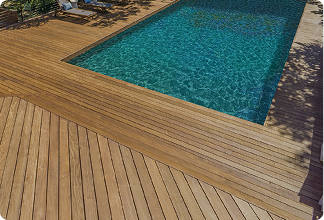
Garapa is a tropical hardwood commonly associated with the botanical species Apuleia leiocarpa. It grows in South America and is commercially known by several names, including Brazilian Ash and Grapia.
It belongs to the Fabaceae family and is valued for its attractive color, hardness, and natural durability.
Garapa is different from many other tropical hardwoods because of its naturally light appearance. Freshly milled boards generally range from pale yellow to golden-brown. This makes it a popular option for people who want the performance and appearance of tropical hardwood without choosing a very dark species.
Its common applications include:
- Outdoor hardwood decking
- Pool decks and patios
- Exterior fencing
- Wood siding
- Outdoor furniture
- Interior flooring
- Ceilings and soffits, when suitable profiles are available
- Architectural wood projects
The appearance and working characteristics of Garapa can vary depending on the growing region, lumber grade, and milling process.
What Does Garapa Wood Look Like?
Garapa is best known for its light, warm appearance.
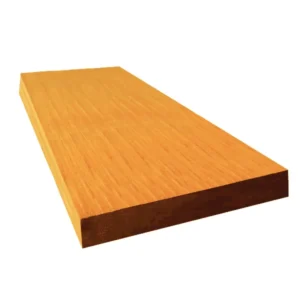
Freshly milled Garapa typically has a blondish, yellowish, or golden-brown tone. Some boards may appear lighter, while others have deeper golden shades.
This natural color is one of the main reasons architects and homeowners select Garapa for outdoor projects.
Unlike Ipe, which generally has a darker brown appearance, Garapa creates a brighter and more open look. It can work particularly well with modern homes, light-colored exterior finishes, outdoor kitchens, and contemporary landscape designs.
Its grain is generally straight to interlocked, with a fine to medium texture.
Does Garapa Wood Change Color?
Yes. Garapa naturally changes color when exposed to sunlight, rain, and outdoor conditions.
Freshly installed boards can gradually lose some of their original golden appearance. Over time, untreated Garapa can develop a silver-gray or weathered appearance.
This color change is a normal characteristic of natural wood exposed to UV radiation and weather.
It is important to understand that color change does not automatically mean the wood is deteriorating. A change in surface color and structural deterioration are two different things.
Homeowners generally have two options:
Maintain the original golden appearance: Apply a suitable exterior hardwood finish with UV protection according to the manufacturer’s instructions. Periodic maintenance will be necessary.
Allow natural weathering: Leave the wood unfinished and allow it to gradually develop a gray or silver-gray appearance.
The final result depends on sunlight, moisture, exposure, and maintenance conditions.
Is Garapa a Good Choice for Outdoor Decking?
Yes. Garapa is commonly used for outdoor decking because of its hardness, natural durability, and attractive appearance.
It is suitable for residential patios, balconies, walkways, pool areas, and larger outdoor living spaces.
One of its biggest advantages is its lighter color. People who like the appearance of tropical hardwood but do not want a dark deck often consider Garapa.
It is also being considered for substantial professional projects, including large decks and commercial outdoor spaces.
However, selecting the correct board thickness and installation method is important.
1×6 vs. 5/4×6 Garapa Decking
Board thickness is an important consideration when purchasing Garapa decking.
Two common dimensions buyers may encounter are 1×6 and 5/4×6.
The difference is thickness. A nominal 1×6 board is typically around 3/4 inch thick after finishing, while 5/4 stock is thicker.
Thicker decking may be preferred for certain exterior applications because board thickness is one factor that affects stiffness and how the boards perform under normal use.
However, the right dimension depends on the deck design, joist spacing, fastening system, and manufacturer’s installation recommendations.
Before purchasing, confirm the actual finished dimensions rather than relying only on nominal lumber sizes.
What Is the Difference Between Nominal and Actual Wood Dimensions?
Lumber dimensions are often advertised using nominal measurements, which are different from the actual finished dimensions.
For example:
| Nominal size | Approximate actual size |
| 1×6 | 3/4″ x 5-1/2″ |
| 5/4×6 | Thicker than 1×6, depending on the finished milling specification |
This difference matters when calculating deck coverage, material quantities, board spacing, and project costs.
Always confirm the actual finished dimensions with your lumber supplier before preparing a project cut list.
Garapa vs. Ipe vs. Cumaru: Which Hardwood Should You Choose?
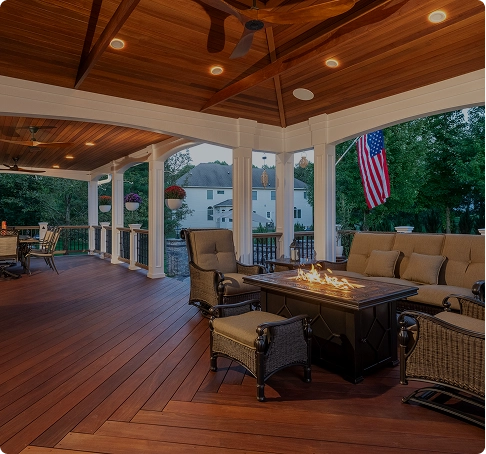
Garapa, Ipe, and Cumaru are popular tropical hardwoods used for outdoor decking. All three offer natural wood beauty, but they have different colors, characteristics, and price considerations.
The right choice depends on the appearance you want, project requirements, material availability, and budget.
Garapa
Garapa is known for its lighter golden-yellow appearance. It is a suitable option for homeowners and designers who want a warm, blond hardwood deck.
Its lighter appearance makes it different from the darker tones of Ipe and Cumaru.
Ipe
Ipe is a very dense tropical hardwood known for its dark brown to olive-brown appearance and high hardness.
It is frequently specified for premium outdoor decking projects. However, its pricing may lead some buyers to explore other tropical hardwood options.
Cumaru
Cumaru is another dense tropical hardwood, generally available in brown to reddish-brown shades.
It is often considered by buyers looking for an alternative to Ipe, depending on the project specifications and available pricing.
| Feature | Garapa | Ipe | Cumaru |
| Typical color | Golden-yellow | Dark brown to olive-brown | Brown to reddish-brown |
| Appearancee | Light and warm | Dark and rich | Rich and varied |
| Hardness | Hard | Extremely hard | Very hard |
| Density | Dense | Very dense | Very dense |
| Outdoor applications | Yes | Yes | Yes |
| Installation | Requires proper fastening | Requires proper fastening | Requires proper fastening |
| Weathered appearance | Gray or silver-gray | Gray or silver-gray | Gray or silver-gray |
Is Garapa a Good Alternative to Ipe?
Garapa can be a good alternative to Ipe for buyers who want a lighter-colored tropical hardwood.
It is worth considering when Ipe pricing is a concern or when the design calls for a blondish-yellow wood appearance rather than a darker brown finish.
However, Garapa and Ipe are not identical. They differ in hardness, density, appearance, and working characteristics.
Architects and contractors should compare the actual product specifications, availability, pricing, and installation requirements before making a decision.
Is Garapa Good for Pool Decking?
Garapa can be used for pool decking when the deck is properly designed and installed.
Pool decks experience frequent exposure to sunlight, water, humidity, and changing temperatures. Therefore, material selection and installation details are particularly important.
Garapa’s natural appearance makes it an attractive option for pool areas where homeowners want a warm, natural wood surface.
Before using it around a pool, consider:
- Proper drainage around the deck.
- Adequate ventilation beneath the boards.
- Suitable board thickness.
- Appropriate joist spacing.
- Corrosion-resistant fasteners suitable for the environment.
- Proper surface maintenance and cleaning.
- Manufacturer recommendations for the specific decking profile.
Garapa is natural wood, so it can expand and contract as moisture conditions change.
Do not assume that one joist-spacing recommendation applies to every Garapa installation. Confirm the required spacing with the product supplier and installation specifications.
Does Garapa Turn Gray Around a Pool?
Yes. Garapa can gradually develop a gray or silver-gray appearance when exposed to sunlight and outdoor weather.
This is a natural weathering process and does not automatically indicate structural deterioration.
If you prefer to maintain its original golden appearance, use an appropriate exterior hardwood finish and follow the recommended maintenance schedule.
Can Garapa Be Used for Fencing?
Yes. Garapa is suitable for exterior fencing applications.
Its natural golden appearance provides a different look from traditional dark fencing materials. It can be used for residential boundaries, privacy fences, decorative screens, and larger architectural fencing projects.
Garapa fencing can also complement a matching hardwood deck or exterior siding.
When planning a fence, consider the finished board dimensions, required lengths, post spacing, fastening method, and total material quantity.
For projects requiring hundreds of individual pieces, planning the cut list before ordering can help reduce unnecessary material waste.
For example, if a project requires hundreds of six-foot fence boards, it may be possible to use longer stock lengths and cut them to size. The most economical approach depends on available lumber lengths and the resulting cutting waste.
Can Garapa Be Used for Siding, Ceilings, and Soffits?
Garapa is not limited to decking and fencing.
It can also be considered for exterior siding and other architectural applications where natural wood appearance is desired.
Its golden color can add warmth to building exteriors and complement other materials such as stone, concrete, glass, and metal.
Garapa may also be suitable for ceilings and soffits when the appropriate milling profile is available.
However, it is important to distinguish between different wood profiles.
Decking boards: These may be solid or edge-grooved for hidden-fastener installation.
Tongue-and-groove boards: These have interlocking edges and are designed for applications such as ceilings, walls, and soffits, depending on the product specification.
Not every Garapa decking board is automatically suitable for a tongue-and-groove ceiling installation. Confirm the profile and intended application before purchasing.
How Is Garapa Decking Installed?
Garapa is a dense hardwood, so proper installation is important.
There are two common approaches to installing hardwood decking: face-screwing and hidden fastening.
Face-Screwing Garapa Decking
Face-screwing involves installing screws through the top surface of each decking board into the supporting joists.
This is a common installation method for solid decking boards.
The process generally involves:
- Positioning the boards with the recommended spacing.
- Pre-drilling holes where required.
- Using appropriate exterior-grade screws.
- Fastening the boards securely to the supporting structure.
- Checking alignment throughout installation.
Stainless-steel screws are commonly considered for exterior hardwood decking because of their corrosion resistance.
The correct screw type and length should be selected according to the project and fastener manufacturer’s recommendations.
Hidden Fasteners for Garapa Decking
Hidden fasteners provide a cleaner deck surface because the fastening system is installed along the edges of the boards rather than through their top faces.
This installation method generally requires edge-grooved decking boards designed to accept a compatible hidden-fastener system.
Solid, non-grooved boards cannot automatically accommodate every hidden-fastener system.
If you prefer hidden fastening, specify the required grooved profile when requesting a quote.
Does Garapa Need Pre-Drilling?
Pre-drilling is often recommended when working with dense hardwood decking.
It helps reduce stress around the fastener and can lower the risk of splitting during installation.
Use appropriate drill bits and fasteners, and follow the installation guidance provided for the particular Garapa product.
What Is Custom Grooving, and Does It Affect Pricing?
Custom grooving is a milling process that creates grooves along the edges of decking boards so compatible hidden-fastener systems can be used.
Garapa does not automatically come with grooves. Buyers may need to request this profile when ordering.
Custom grooving can affect both material cost and production time.
If you are planning a large decking project, discuss the required profile with your supplier before purchasing the lumber.
Waiting until after the boards have been ordered can create additional scheduling and processing requirements.
The same principle applies to other custom milling or profiling requests.
Random Lengths vs. Fixed Lengths: What Should You Order?
Garapa lumber may be available in random lengths or specified lengths, depending on inventory and supplier availability.
Understanding the difference can help you manage project costs.
Random-Length Garapa
Random-length packages contain boards in different lengths rather than one fixed measurement.
This allows buyers to work with the available lumber sizes and can offer more flexibility when planning a project.
Random lengths can also be economical because they allow suppliers to use a broader range of available stock instead of selecting only one highly demanded length.
Fixed-Length Garapa
Fixed-length orders are intended for buyers who need particular board lengths.
They can make project planning easier when the design requires consistent measurements.
However, specific lengths may have different availability and pricing.
How to Reduce Waste When Ordering Garapa
Before ordering lumber, prepare a detailed cut list.
For example, a fencing project requiring 301 pieces at six feet each should be evaluated against the available stock lengths.
Longer boards may be cut into the required pieces, but the best combination depends on the available lengths and the amount of waste produced.
Contractors should calculate the required finished lengths before requesting a quote rather than automatically requesting one length for every board.
How Much Garapa Wood Do You Need for a Deck?
The quantity depends on the deck’s square footage, board width, spacing, and cutting requirements.
For example, approximately 2,200 linear feet of decking may cover around 1,000 square feet when using boards with an approximate 5.5-inch finished width and allowing for typical spacing assumptions.
This is only a preliminary estimate, not a universal conversion.
The actual quantity will depend on:
- Finished board width.
- Gap between decking boards.
- Deck shape and layout.
- Board lengths.
- Cutting waste.
- Stairs, borders, and other design details.
For an accurate estimate, prepare the deck dimensions and confirm the actual board specifications with your lumber supplier.
Does Garapa Wood Expand and Contract?
Yes. Like other natural wood products, Garapa responds to changes in moisture.
When wood absorbs moisture, it can expand. When it dries, it can shrink.
This movement is normal and should be considered during installation.
Several factors influence how Garapa performs:
- Initial moisture content.
- Local humidity and weather.
- Board thickness and width.
- Installation spacing.
- Acclimation conditions.
- Fastening method.
- Drainage and ventilation.
Allowing lumber to acclimate under appropriate conditions before installation can help prepare it for the environment where it will be used.
Proper board spacing, suitable fastening, and adequate drainage are also important.
Garapa should not be treated as a material that remains completely dimensionally stable in every environment.
How Should Garapa Wood Be Stored Before Installation?
Proper storage helps protect Garapa lumber before installation.
Keep boards supported, elevated from the ground, and protected from standing water.
Avoid storing lumber in conditions that cause uneven moisture exposure.
Where appropriate, protect the boards from direct weather while allowing airflow around the stack.
Follow the supplier’s storage and acclimation recommendations before installation.
For large projects, coordinate lumber delivery with the installation schedule to avoid unnecessary storage periods and handling.
Does Garapa Need to Be Sealed?
Garapa does not necessarily need to be sealed simply because it is being used outdoors.
The decision depends on the appearance you want.
If you prefer its original golden-yellow appearance, an appropriate exterior hardwood finish with UV protection can help slow the natural color change.
If you prefer a weathered silver-gray appearance, you can allow the wood to age naturally.
Always use a finish designed for the intended outdoor application and follow the manufacturer’s preparation and application instructions.
How Do You Maintain Garapa Decking?
Garapa maintenance depends on the environment and whether you want to preserve its original color.
Basic maintenance should include:
- Removing leaves and other debris.
- Cleaning dirt and surface buildup.
- Checking for standing water.
- Keeping drainage areas clear.
- Inspecting boards for damage.
- Checking screws and other fasteners.
- Maintaining airflow beneath the deck.
- Reapplying an appropriate finish when necessary.
If the deck develops a rough surface over time, suitable sanding and refinishing may be considered.
Avoid using cleaning products or maintenance treatments that are not compatible with the wood or existing finish.
Can Garapa Be Used in Hot and Sunny Climates?
Garapa can be considered for outdoor projects in hot and sunny climates, including locations such as Florida, California, and Hawaii.
However, sunlight and temperature can affect the appearance and surface conditions of any outdoor decking material.
Direct UV exposure gradually changes the natural color of Garapa.
In humid locations, moisture management and proper ventilation are also important.
When evaluating Garapa for a hot-climate project, consider the following:
- Expected sunlight exposure.
- Local humidity and rainfall.
- Deck drainage.
- Supporting structure.
- Installation specifications.
- Desired long-term appearance.
- Maintenance expectations.
The performance of the completed deck depends on the complete installation, not just the wood species.
Is Garapa Sustainable?
The sustainability of Garapa depends on its origin, harvesting practices, and supply chain.
When purchasing tropical hardwood, buyers should ask suppliers about species identification, country of origin, legal sourcing, and available certification documentation.
If forest certification is important for your project, request the relevant documentation and verify that it applies to the actual product being purchased.
Do not assume that all Garapa lumber has the same sourcing credentials.
What Are the Advantages of Garapa Wood?
Garapa offers several benefits for homeowners, architects, and contractors.
Light golden appearance: Its blondish-yellow color makes it appealing for contemporary outdoor designs.
Natural durability: It is a tropical hardwood commonly used in exterior applications.
Hard surface: Its hardness makes it suitable for applications involving regular foot traffic and everyday wear.
Versatile applications: It can be used for decking, fencing, siding, flooring, furniture, and suitable architectural profiles.
Design flexibility: It can retain a warmer appearance with an appropriate finish or develop a natural gray color over time.
Alternative to darker hardwoods: It provides a lighter visual option for buyers comparing Garapa, Ipe, and Cumaru.
What Are the Disadvantages of Garapa Wood?
Although Garapa has several useful characteristics, there are a few considerations before purchasing it.
Color changes over time: Outdoor exposure will gradually change its original golden appearance.
Installation requires care: Its density means suitable tools, fasteners, and preparation are important.
Natural wood movement: Garapa expands and contracts with changing moisture conditions.
Weight: Dense hardwood boards can require additional effort during transportation and installation.
Custom milling requirements: Grooving and other custom profiles may increase costs and production time.
Availability of specific lengths: Fixed-length orders may have different availability and pricing compared with random-length packages.
Understanding these limitations can help you plan your project more accurately.
What Affects the Price of Garapa Wood?
Garapa pricing depends on several factors, so the final cost can vary between projects and orders.
Important factors include:
- Board thickness and width.
- Total quantity purchased.
- Random lengths versus specified lengths.
- Solid versus grooved profiles.
- Custom milling requirements.
- Lumber grade and availability.
- Delivery location and shipping requirements.
For a more accurate quote, provide your supplier with the project square footage, preferred board dimensions, required lengths, installation profile, and delivery ZIP code.
This information helps suppliers evaluate the order and recommend suitable material.
Why Should You Request a Garapa Wood Sample?
Natural wood has variations in color and grain, even when boards come from the same lumber batch.
Online photographs can provide a general idea of how Garapa looks, but lighting, photography, and screen settings can affect its appearance.
A physical sample allows you to evaluate:
- The natural golden-yellow color.
- Grain patterns.
- Surface texture.
- Differences between individual boards.
- How the wood complements your home’s exterior materials.
If color consistency is particularly important for your project, reviewing physical samples before placing a large order is a practical step.
What Information Should You Provide When Requesting a Garapa Quote?
Whether you are a homeowner, contractor, or architect, providing the right information can make the quoting process easier.
Before contacting a supplier, prepare the following:
- Project size: Total square footage or required linear footage.
- Board dimensions: Preferred thickness and width, such as 5/4×6.
- Board lengths: Random lengths or specific finished lengths.
- Board profile: Solid, edge-grooved, or another custom profile.
- Installation preference: Face screws or compatible hidden fasteners.
- Delivery location: Project ZIP code.
- Project timeline: When the material is required.
- Accessories: Fasteners, finishes, and other installation products.
Having these details ready can help you receive a more accurate quote and avoid unnecessary delays.
FAQs About Garapa Wood
Is Garapa a good alternative to Ipe?
Yes. Garapa can be an alternative to Ipe for buyers looking for a lighter-colored tropical hardwood. It has a golden-yellow appearance, while Ipe generally has a darker brown color. Compare their specifications, pricing, and installation requirements before choosing.
Does Garapa wood turn gray?
Yes. Untreated Garapa gradually develops a gray or silver-gray appearance when exposed to sunlight and outdoor weather. This is a natural weathering process and does not automatically mean the wood is structurally deteriorating.
Should I use 1×6 or 5/4×6 Garapa for decking?
Both dimensions can be considered, depending on the project design and installation requirements. A 5/4 board is thicker than a nominal 1x board. Confirm actual finished dimensions, joist spacing, and the supplier’s installation recommendations before purchasing.
Can Garapa decking be grooved for hidden fasteners?
Yes. Garapa decking can be custom-grooved to accommodate compatible hidden-fastener systems. However, grooving is a milling requirement that should be specified when requesting a quote.
Is Garapa good for pool decking?
Yes. Garapa can be used for pool decking when the installation includes suitable drainage, ventilation, spacing, and fastening. Its surface and maintenance requirements should also be considered in areas exposed to frequent moisture.
Can Garapa be used for fencing?
Yes. Garapa is suitable for exterior fencing and privacy screens. Its golden appearance provides a natural alternative to darker fencing materials.
Is Garapa suitable for hot climates?
Garapa can be considered for hot and sunny outdoor environments. However, direct sunlight changes its color over time, and local moisture conditions should be considered during installation and maintenance.
Does Garapa need stainless-steel screws?
Corrosion-resistant fasteners are important for exterior hardwood decking. Stainless-steel screws are commonly considered, particularly in coastal or moisture-exposed environments. Follow the recommendations for the specific fastener and installation system.
Can Garapa be used for ceilings?
Garapa can be used for suitable ceiling and soffit applications when the correct milling profile is available. Tongue-and-groove boards should be specified for applications requiring interlocking profiles.
How do I calculate the linear footage of Garapa decking?
The required linear footage depends on the deck’s square footage, actual finished board width, spacing, and waste allowance. A preliminary estimate can be made using these measurements, but a detailed cut list provides a more accurate quantity.
Conclusion
Garapa is an attractive tropical hardwood for homeowners, architects, and contractors looking for a lighter alternative to darker hardwoods such as Ipe and Cumaru.
Its blondish-yellow and golden-brown appearance, natural durability, and versatility make it suitable for decking, pool areas, fencing, siding, flooring, and other architectural projects.
However, selecting the right Garapa product involves more than choosing a wood species. Board thickness, actual dimensions, available lengths, custom grooving, fastening methods, and installation requirements all affect the final result.
Its natural color will also change with outdoor exposure. You can maintain more of its original golden appearance with an appropriate exterior finish or allow it to develop a natural silver-gray appearance.
If you are planning a Garapa decking, fencing, or exterior project, Brazilian Lumber offers tropical hardwood options including Garapa, Ipe, and Cumaru. Contact Brazilian Lumber to discuss your project requirements, request samples, compare available dimensions, and get a quote for your next hardwood project.
We can mill customs sizes
Premium decking
Search engine
Use this form to find things you need on this site

Deckotech Collection

Oct 26 – Nov 6 · For trade professionals
Scary-good trade pricing
Sign up to get up to 27% trade discount across the Deckotech range.
Offer valid for new contractors only and does not apply to purchases made before October 26, 2026. The promotion cannot be combined with additional discounts or existing contractor pricing. Discounts may vary depending on the product, length, and availability. Limited stock available. This promotion is valid through November 6, 2026.