

 Free Shipping
*Applies to Ipe & Cumaru short length orders from 3–5 ft. Minimum purchase of $2,500 required. U.S. mainland only. Other conditions may apply.


Is Cedar a Hardwood? Types, Uses, Grades, and How to Choose
Best Sellers
Posted on November 23, 2026 at 2:09 am
Table of Content
When shopping for wood for a fence, ceiling, soffit, gate, or other building project, you may come across cedar as one of the recommended options. It has a natural appearance, is relatively lightweight, and is commonly used in both indoor and outdoor applications. But one question often comes up before buying: Is cedar a hardwood or a softwood?
Cedar is a softwood, not a hardwood. It comes from coniferous trees, which generally produce needles or scale-like leaves and develop cones. However, being a softwood does not mean cedar is weak or unsuitable for demanding projects. Different cedar species have different properties, appearances, and uses.
If you are planning to purchase cedar lumber, there is more to consider than its hardwood or softwood classification. The species, grade, dimensions, profile, board length, and intended application can all affect your decision.
Let’s look at what makes cedar a softwood, the different types available, where they are used, and what you should know before requesting a quote.
Is Cedar a Hardwood or Softwood?
Cedar is classified as a softwood because it comes from coniferous trees. Most cedar species belong to the cypress family, although the name cedar is also used for several unrelated trees.
Hardwoods generally come from deciduous trees, while softwoods come from conifers. This classification is based on the type of tree rather than how hard or durable the finished wood is.
For example, some softwoods are naturally durable and suitable for exterior applications, while certain hardwoods may require additional protection depending on where they are installed.
Cedar is popular because it offers a combination of natural beauty, relatively low weight, workability, and natural resistance to decay and insects. These characteristics make it useful for fencing, siding, soffits, ceilings, gates, and other projects.
Not All Cedar Is the Same
One important thing to understand when purchasing cedar is that the name alone does not tell you exactly what product you are getting.
There are several types of cedar available in the lumber market. They differ in appearance, properties, availability, and applications.
Here are some of the types buyers commonly ask about.
Western Red Cedar
Western Red Cedar is one of the most recognized cedar species used in construction and exterior projects.
It has a warm reddish-brown appearance, a relatively straight grain, and a lightweight structure. It is commonly selected for:
- Exterior soffits
- Cedar fencing
- Gates
- Siding and wall cladding
- Outdoor ceilings
- Tongue-and-groove installations
- Selected sauna applications
Western Red Cedar is available in different grades and profiles. Buyers may request clear cedar for a cleaner appearance or knotty cedar when they prefer a more natural, rustic look.
Yellow Cedar
Yellow Cedar, also known as Alaska Yellow Cedar, has a lighter yellowish color compared with Western Red Cedar.
It is valued for its natural durability, fine texture, and workability. It can be considered for exterior construction, decking components, millwork, and other applications depending on the required specifications.
When requesting cedar lumber, make sure you specify whether you need Yellow Cedar or Western Red Cedar. They are different products and should not be treated as interchangeable.
Spanish Cedar
Spanish Cedar is another wood that buyers may encounter when searching for cedar lumber.
Despite its name, it is botanically different from Western Red Cedar. It is known for its reddish appearance, workability, and characteristic aroma.
Spanish Cedar is particularly associated with cigar boxes, humidors, cabinetry, and interior applications. It may also be requested for cigar rooms and specialty woodworking projects.
If you need Spanish Cedar, mention the species specifically when contacting a lumber supplier.
What Is Clear Cedar?
Clear cedar refers to cedar lumber selected for a cleaner and more uniform appearance, generally with limited visible knots and other natural defects.
It is often requested for projects where the wood will remain visible and appearance matters.
For example, clear Western Red Cedar may be used for:
- Exterior soffits
- Ceiling installations
- Wall cladding
- Decorative gates
- Interior wood ceilings
- Tongue-and-groove installations
Clear cedar can create a more consistent appearance across a large installation. However, clear does not automatically mean completely free of every natural characteristic.
Grading terminology and permitted defects can vary, so confirm the exact grade and appearance requirements with your supplier before ordering.
What Is Cedar Tongue-and-Groove?
Cedar tongue-and-groove, commonly called cedar T&G, is a type of milled lumber where one edge has a projecting tongue and the other has a matching groove.
The boards fit together during installation, creating a connected surface with a relatively consistent appearance.
Cedar T&G is commonly used for:
- Exterior soffits
- Covered porch ceilings
- Interior ceilings
- Wall cladding
- Sauna walls
- Selected interior decorative applications
A common request is 1×6 clear Western Red Cedar T&G. However, the actual availability depends on the species, grade, profile, dimensions, and required quantity.
Understanding T&G Coverage
One important detail when purchasing tongue-and-groove cedar is the difference between nominal board width and actual installed coverage.
For example, a 1×6 T&G board does not necessarily cover six inches of width after installation.
Part of the board forms the tongue-and-groove connection, so the exposed face is narrower than the overall nominal width.
This matters when converting a price per linear foot into a price per square foot or estimating the total material needed.
Always ask your supplier for the actual face coverage of the specific profile you are purchasing.
How Cedar Lumber Is Sold: Sizes, Profiles, and Lengths
Cedar lumber is available in different dimensions and milling profiles depending on the supplier and market.
Some common customer requests include:
- 1×6 cedar boards
- 1×6 tongue-and-groove cedar
- 1×10 and 1×12 cedar boards
- 2×6 cedar lumber
- 4×4 cedar posts
- Rough cedar lumber
- Surfaced or dressed cedar
- Random-length boards
- Specific 8-foot, 10-foot, or 16-foot lengths
These are examples of requested sizes, not a guarantee that every size is regularly stocked.
Nominal Size vs. Actual Size
Lumber dimensions can sometimes be confusing, especially when ordering material for a project that requires precise measurements.
A 1×6 is a nominal size. After surfacing and milling, its actual finished dimensions may be smaller than one inch by six inches.
The same applies to other standard lumber sizes.
If you are installing cedar between existing structures or working with a detailed construction plan, confirm the actual finished thickness and width before placing an order.
Rough vs. Surfaced Cedar
Cedar can also be purchased in rough or surfaced form.
Rough cedar has not been fully smoothed through the surfacing process. It retains a more natural, unfinished appearance and may require additional preparation.
Surfaced cedar has been milled to create smoother faces and more consistent dimensions.
The right option depends on your installation method, appearance requirements, and whether additional milling will be done on-site.
What Is Cedar Used For?
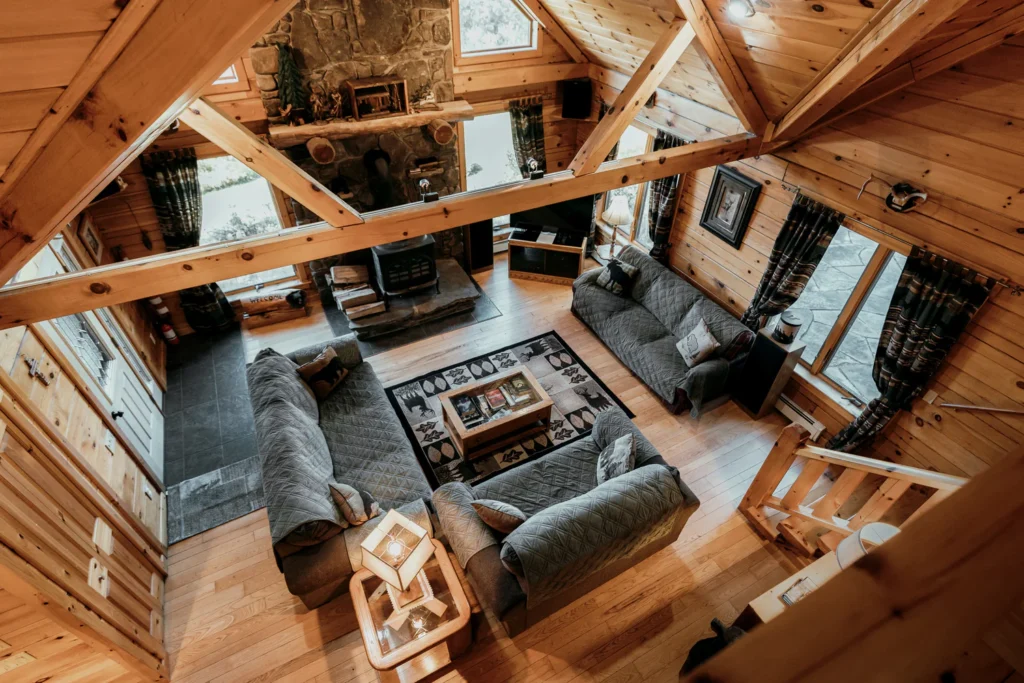
Cedar is a versatile softwood with applications in residential construction, commercial projects, and decorative installations.
Cedar for Exterior Soffits

Cedar is frequently considered for exterior soffits because of its natural color and attractive grain.
It can create a warm finish beneath roof overhangs and covered outdoor spaces.
When choosing cedar for soffits, consider the desired color, grade, board dimensions, and installation profile. Clear Western Red Cedar is worth considering when a cleaner and more uniform appearance is important.
You should also consider sun exposure, ventilation, moisture conditions, finishing requirements, and maintenance.
Cedar is not automatically maintenance-free simply because it has natural durability.
Cedar for Fencing
Cedar is a popular choice for residential fencing because of its natural appearance and relatively lightweight structure.
It can be used for privacy fences, decorative fencing, garden boundaries, and other outdoor installations.
When calculating how much cedar you need, start with the total fence length and height.
You should also consider:
- Board orientation
- Board width
- Spacing between boards
- Number of posts
- Post dimensions
- Gate openings
- Required board lengths
- Cutting waste
For example, a project requiring approximately 245 cedar boards and 35 to 40 posts needs more than a simple square-foot calculation. The board dimensions, spacing, and fence layout will determine the actual quantity.
Cedar for Gates
Cedar can also be used for decorative and privacy gates.
Its natural appearance works well with different exterior designs, including traditional and contemporary properties.
However, the availability of the required thickness, width, and length is important. A specific gate design may require dimensions that are not readily available in every cedar species or grade.
Discuss your design and measurements with your supplier before finalizing the gate construction.
Cedar for Saunas
Cedar is commonly associated with sauna interiors because of its appearance, aroma, and traditional use in sauna construction.
It may be considered for wall lining, tongue-and-groove panels, and selected bench applications.
However, not every cedar product is automatically suitable for every sauna component.
Surface temperatures, wood characteristics, resin, fasteners, finishing products, and the intended installation location should all be considered.
Choose materials specifically appropriate for the sauna environment and follow the manufacturer’s installation recommendations.
Cedar vs. Thermally Modified Wood and Ipe
Cedar is not always the only option when choosing wood for an exterior project.
Depending on the application, buyers may also compare it with thermally modified wood or tropical hardwoods such as Ipe.
| Feature | Cedar | Thermally Modified Wood | Ipe |
| Classification | Softwood | Depends on original species | Hardwood |
| Appearance | Natural reddish or yellowish tones, depending on species | Depends on original wood | Rich brown tones |
| Weight | Generally lightweight | Depends on species | Very dense and heavy |
| Common applications | Fencing, soffits, ceilings | Cladding, soffits, siding | Decking and exterior applications |
| Installation | Generally workable | Depends on product | Requires appropriate tools and fasteners |
The right choice depends on your project rather than simply whether the wood is a hardwood or softwood.
For example, a contractor selecting material for an exterior soffit may compare clear Western Red Cedar with thermally modified Ayous or Ipe.
The decision may involve appearance, weight, finishing, installation requirements, availability, and overall material cost.
Before choosing, compare the technical specifications of the actual products rather than relying on general statements about an entire wood species.
How Much Cedar Do You Need?
The quantity of cedar required depends on what you are building.
For ceilings and soffits, start with the total square footage. Then calculate the number of boards using the actual exposed face width of the selected profile.
For fencing, measure the total fence length and height. Account for board orientation, spacing, posts, and gates.
For tongue-and-groove installations, use the installed face coverage rather than the nominal board width.
For larger commercial projects, linear footage, board lengths, minimum acceptable lengths, and random or specified lengths become particularly important.
It is always worth allowing for cutting waste and checking your measurements before ordering.
Do Cedar Board Lengths Matter?
Yes. Board lengths can affect the appearance, installation, and material requirements of a project.
Random-length cedar means the boards come in different lengths within the supplier’s available range.
Specified-length cedar means you request particular board lengths or minimum lengths.
For long ceilings, soffits, and walls, longer boards may help reduce the number of visible joints. However, the availability of longer boards can depend on the species, grade, and supplier.
If you are purchasing a large quantity of clear cedar T&G, discuss the minimum board length before placing the order. This helps you plan the layout and avoid unexpected seams.
What Affects the Cost of Cedar Lumber?
Cedar prices can vary considerably depending on the product and project requirements.
Some of the main factors include:
- Cedar species
- Lumber grade
- Clear or knotty appearance
- Rough or surfaced finish
- Board thickness and width
- Tongue-and-groove or other profiles
- Board lengths
- Random or specified lengths
- Total order quantity
- Current availability
- Delivery location
A standard cedar board and clear Western Red Cedar T&G are different products, so their prices should not be compared without considering the specifications.
For an accurate quote, provide your supplier with the exact requirements rather than asking for the price of cedar in general.
What Information Should You Provide When Requesting a Cedar Quote?
Before contacting a lumber supplier, try to gather the following details:
- Cedar species, such as Western Red Cedar, Yellow Cedar, or Spanish Cedar.
- Intended application, such as fencing, soffits, ceilings, or gates.
- Required profile, such as tongue-and-groove or square edge.
- Nominal dimensions and required finished dimensions.
- Total quantity or linear footage.
- Square footage, if applicable.
- Preferred board lengths.
- Minimum acceptable board length.
- Clear or knotty grade requirements.
- Rough or surfaced material.
- Pickup or delivery preference.
- Delivery ZIP code.
- Date when the material is needed.
Providing these details makes it easier for the supplier to identify the right product and check availability.
Frequently Asked Questions
Is cedar stronger than hardwood?
Not necessarily. Cedar is a softwood, and its strength depends on the species and grade. Some hardwoods have greater density and strength, but the right comparison depends on the intended application.
Does cedar rot easily?

Cedar has natural characteristics that help it resist decay, but it is not completely rot-proof. Prolonged moisture exposure, poor drainage, and unsuitable installation conditions can still cause problems.
Is Western Red Cedar good for outdoor use?
Western Red Cedar is commonly used for outdoor applications, including fencing, soffits, siding, and covered ceilings. Its performance depends on exposure, installation, maintenance, and the specific product grade.
Is Spanish Cedar the same as Western Red Cedar?
No. They are different species with different characteristics and applications. Always specify which one you need when purchasing cedar lumber.
Is clear cedar better than knotty cedar?
Neither is automatically better. Clear cedar is generally selected for a cleaner appearance, while knotty cedar offers a more rustic look. Your choice depends on the design and budget.
Can cedar be used for tongue-and-groove ceilings?
Yes. Cedar T&G is commonly used for interior ceilings, covered porch ceilings, and exterior soffits when the product is suitable for the installation conditions.
Is cedar available in 16-foot lengths?
Availability depends on the cedar species, grade, profile, and current supply. If your project requires 16-foot boards or other specific lengths, confirm availability before finalizing your material calculations.
Find the Right Cedar Lumber for Your Project
Choosing cedar involves more than knowing whether it is a hardwood or softwood. You need to consider the species, grade, dimensions, profile, board lengths, and the conditions in which the material will be installed.
Whether you need Western Red Cedar for an exterior soffit, clear cedar T&G for a ceiling, cedar boards for fencing, or Spanish Cedar for a specialty interior project, getting the specifications right can save time and prevent ordering problems.
Brazilian Lumber can help source cedar lumber for residential and commercial projects, including larger-volume orders and select profiles and dimensions. Share your required species, size, quantity, preferred lengths, and delivery ZIP code with the team so they can check current availability and help you find the right material.
We can mill customs sizes
Premium decking